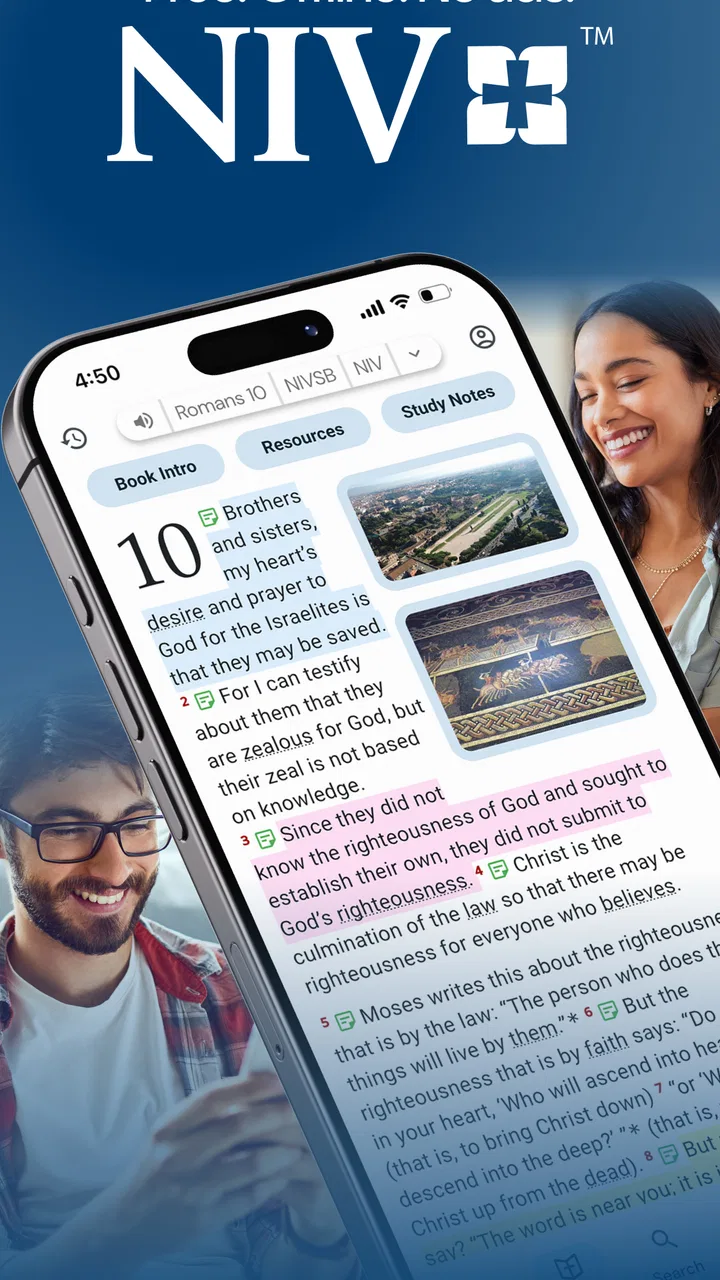
NIV Bible
- 4.9
- Rating
- 500.00K
- Installs
- Free
- Price

 Analysis by App-foxy
I have used NIV Bible as a practical reading companion rather than treating it like a simple digital copy of a printed Bible. Its strongest idea is the way it brings the New International Version together with a daily verse, devotional material, reading plans, audio, and prayer tools. That combination changes the app from something I open only when I need to look up a passage into something I can return to during a normal day.
It is a free Books & Reference app from Tecarta, Inc., available to everyone using Android 8.0 or later. The app has built a strong audience, with a 4.9 average from around 14 thousand ratings and over 500 thousand installs. Those figures do not replace personal testing, but they do suggest that the straightforward Bible-reading experience works well for many people.
How the NIV Bible turns reading into a daily routine
I find a daily reading habit easier to keep when I decide in advance what a short session will look like, rather than waiting for a spare hour to appear. This section looks at how the app’s reading, listening, and reflection options can fit around ordinary routines, while keeping the focus on the passage rather than checking off features.
You May Also Like

 Blood Strike: 2.5 Anniversary
Blood Strike’s Loadouts Turn Every Drop Into a Tactical Gamble
A close look at Blood Strike’s custom loadouts: how fast access to signature weapons reshapes its battle royale rhythm, rewards preparation, and narrows the gap between fights.

 Pandora - Music & Podcasts
Pandora’s Music Is Easy to Start, but Harder to Recover
Pandora’s strength is its low-effort path from a seed to a station. Its weak spot is how much confidence it asks you to place in connection, setup, and quiet recovery.

 8 Ball Pool
 Is Built on Rivalries, Rematches, and Routine
A close look at the rivalries, rematches, shared routines, and unanswered safety questions that turn a quick pool match into a persistent mobile community.

 Samsung Music
’s Quiet Strength Is Playing What You Already Own
Its reach comes less from spectacle than from dependable access to a personal library. That simplicity is both the app’s strongest retention engine and its ceiling.

 AccuWeather: Weather Radar
AccuWeather Review: A Quick, Clear Forecast for Everyday Decisions
For everyday plans, the best forecast is the one you can understand quickly. AccuWeather makes rain timing, radar, and local conditions easy to act on, with a few trade-offs.

 Hill Climb Racing
Why Hill Climb Racing Still Turns Crashes Into One More Run
A tiny car, a bumpy hill and one more upgrade: Hill Climb Racing keeps resurfacing because its simple chaos makes every near-miss feel personal.
More From Our News Desk



The capability that matters most
The central strength here is not simply access to the NIV text. It is the connection between reading and routine. A daily verse can give me a short starting point, while a devotional can add context or reflection. A reading plan gives that moment some direction, and audio offers a different way to engage when looking at a screen is inconvenient. Prayer features complete the cycle by moving from reading to personal response.
The real benefit is continuity: the app helps me decide what to do next. Many Bible apps are excellent reference tools, but they can leave the reader staring at a large collection of books and chapters without a clear path. NIV Bible feels more useful when I want a manageable habit rather than an occasional search.
I also appreciate that these elements serve different kinds of attention. On a quiet morning, I can read a longer passage. During a short break, the daily verse or devotional is more realistic. When I am walking or doing household work, audio makes the content available without requiring constant screen time. That flexibility is more meaningful than simply having many features listed in one place.
What the experience feels like in practice
My preferred workflow starts with the daily verse. I use it as a low-pressure entry point instead of promising myself an ambitious study session. If the verse raises a question, I move into the surrounding passage rather than stopping at the isolated quotation. This is an important habit because a daily verse is convenient, but the wider chapter usually provides the context needed for a more responsible reading.
From there, a reading plan is useful when I want structure. I would not choose a plan merely because it sounds comprehensive. I would choose one that matches the time I actually have. A plan that fits a few minutes each day is more valuable than an impressive schedule I abandon after a week. The app works best when I treat the plan as a guide, not as a test of discipline.
The devotional component adds another layer, but I see it as a prompt for reflection rather than a replacement for the biblical text. I read the passage first when possible, then use the devotional to think about an application. That order keeps the app from becoming only a stream of short inspirational messages.
Audio is especially helpful in situations where reading is awkward. I can listen while preparing breakfast or during a walk, then return to the text later to examine a verse more carefully. I would not use audio as my only method for serious study, because it is harder to pause over wording, compare nearby verses, or notice the shape of a passage. It is best as a second mode, not a complete substitute for reading.
A realistic everyday use case
Imagine a weekday morning when I have ten minutes before leaving home. I open the daily verse, read the devotional, and then continue into a short portion of a reading plan. If I am rushed, I leave the deeper reading for the evening and listen to the passage later. Before bed, I return to the verse that stayed with me and use the prayer section to turn that thought into a personal response.
That sequence is simple, but it solves a common problem: the difference between wanting a regular Bible habit and having enough time for a long study session. I do not need to choose between a full chapter and doing nothing. The app gives me several entry points, and I can expand the session when my schedule allows.
For a family, the same flexibility can be useful in a different way. One person might prefer listening, another might read the passage, and someone else might use the devotional as a discussion prompt. I would still recommend agreeing on the passage beforehand rather than letting each person move through separate content. The app supports shared attention best when the group supplies the conversation.
Small habits that make the app more useful
One practical tip is to separate discovery from study. The daily verse is good for discovery, but when a verse feels especially meaningful, I make a point of opening the full passage. This prevents the app’s most convenient feature from becoming a context-free substitute for reading.
A second tip is to use audio strategically. Instead of listening randomly, I use it to preview a passage before reading it later. Hearing the flow first can make the written text feel more familiar, while the later reading lets me slow down at difficult or important sections. This two-stage approach is more useful to me than leaving audio running in the background without a purpose.
A third insight is that reading plans work better when I allow a plan to support my schedule rather than control it. Missing a day should not turn the app into a source of guilt. I would rather continue from the next sensible point than rush through several sessions just to restore a perfect sequence. That approach keeps the tool encouraging and makes long-term use more likely.
Where the experience has limits
The same range of options that makes NIV Bible approachable can also create distraction. A daily verse, devotional, plan, audio session, and prayer prompt can feel like several competing invitations. If I open the app without deciding what I want from the session, I can spend more time choosing an activity than reading. My solution is to select one main purpose before opening it: read, listen, reflect, or pray.
It is also important to understand what kind of Bible app this is. The NIV is a readable modern translation, which makes it comfortable for everyday reading, but readers who regularly compare translations, examine original-language details, or use extensive scholarly reference material may prefer a dedicated study platform. NIV Bible is more focused on accessible engagement than on building a large research desk.
That distinction matters for students, teachers, and serious group leaders. I would happily use this app to prepare my first reading of a passage, but I would not rely on it alone for detailed academic work. A printed study Bible or a more specialized reference app may offer better depth for cross-references, language study, and extended notes. Choosing this app means valuing a guided daily experience over a library of advanced research tools.
Cost, access, and what to expect
The app is free to download, which makes it easy to try without committing money at the start. It includes in-app purchases ranging from $0.99 to $299.99 per item, so I would pay attention to any purchase screen and decide whether optional additions fit my needs before confirming anything. For someone who only wants basic access to the NIV and the daily routine, the important question is not whether every extra is necessary, but whether the free experience already matches the intended use.
The age rating is Everyone, so it is suitable for a broad audience from a content-rating perspective. That does not mean every devotional topic will feel equally relevant to every reader, but it does make the app a reasonable choice for households, newcomers, and older users who want a less complicated starting point.
The current version is 10.2.335, and the app was released on July 11, 2024. I would keep the app updated through the normal device process, especially if audio or reading-plan continuity is important to me. On Android, the minimum requirement of version 8.0 or later also means that users with older phones should check compatibility before planning to use it as their main reading tool.
Who benefits most from this approach
I think NIV Bible is strongest for people who want a clear, repeatable devotional rhythm. It suits a new reader who does not know where to begin, a busy person who needs short and flexible sessions, and an experienced reader who wants a convenient daily companion without replacing a deeper study setup.
It is particularly good for someone who moves between formats. If I read in the morning, listen later, and return to a prayer prompt at night, the app earns its place because it supports the way a day actually unfolds. That is more valuable than a feature that looks impressive but only works in one narrow situation.
It may be less suitable for someone seeking a completely distraction-free reading environment. A physical Bible remains better for leaving the phone aside, and a minimalist ebook-style reader may feel calmer for uninterrupted reading. Likewise, readers who want several translations, extensive annotation, or technical study tools should compare this app with a more research-oriented alternative before settling on it.
Network interruptions and a sensible routine
Connectivity matters most when I am moving between the app’s different kinds of content. A short verse and a passage I have already opened are different from a new devotional or an audio session, so I avoid assuming every part will be equally ready when my connection is weak. If I know I will be traveling or entering a place with unreliable reception, I check the content I plan to use while I still have a dependable connection. I would not build an important routine around material I have not opened in advance.
This is also where the app differs from a paper Bible in a practical way. A printed copy is immediately available without a network or battery, while an app can bring reading, listening, and reflection into one pocket-sized routine but depends on a functioning device and whatever connectivity a particular activity requires. I find the app most useful as a companion, not as the only way I can access a passage in every circumstance.
When a connection drops
If a page, plan, or audio session does not load as expected, I first separate a network problem from a reading problem: I try the text I have already reached, then reconnect before moving on to new material. I avoid repeatedly tapping a purchase or loading control when the connection is unstable, since that can make it harder to tell what has actually completed. For an important passage, keeping its reference in mind gives me a simple route back once the app is responsive again.
That small recovery habit is useful for commuters and anyone switching between home Wi-Fi and mobile service. Rather than starting over or abandoning the whole session, I can finish the part already in front of me and resume the next activity later. The app’s mix of reading, audio, and devotional material makes this distinction worthwhile: a disrupted listening session need not cancel a brief text-reading moment.
Using it without wasting mobile data
Audio is the part I would treat most deliberately when data use matters. I choose listening for a walk or a chore when it adds real convenience, rather than letting it run simply because the option is there. For short breaks, reading a passage on screen is often the more direct choice. On a limited plan, I would use a trusted Wi-Fi connection for any content I expect to revisit, then check how the app behaves on my own device before relying on it away from home.
A practical pattern is to decide the day’s format in advance: text for a quiet break, audio when my hands or eyes are occupied, and a devotional or prayer reflection when I have space to pause. This reduces aimless browsing and helps me keep the app’s connected features purposeful. It is especially helpful for families sharing a device or network, where a long listening session may be less convenient than reading together.
Choosing it over other Bible options
Compared with a bare digital Bible reader, this app offers more help establishing a routine through its devotional, plans, daily verse, audio, and prayer elements. Compared with a study-focused Bible platform, its appeal is the guided, accessible flow rather than a deep research workspace. And compared with print, it is easier to carry several modes of engagement in one place, while paper remains the simpler choice when I want no screen, battery, or connection in the middle.
That makes the decision less about which format is universally best and more about the moment I need it for. A newcomer who wants a clear next step may appreciate the structure here; someone who already knows exactly what passage to study may prefer a leaner reader. A person who wants technical tools or several translations should look beyond this NIV-centered experience, while a reader seeking a daily rhythm can make better use of its bundled approach.
My final view after using it
I would recommend NIV Bible to a friend who has good intentions about reading regularly but struggles to turn those intentions into a routine. Its most convincing feature is the connection between a daily verse, devotional reflection, structured plans, audio, and prayer. Each part is useful on its own, but the real value appears when they form a flexible sequence that fits different moments of the day.
I would not describe it as the most complete tool for advanced Bible scholarship, and I would be careful with optional purchases rather than assuming every extra is essential. Still, for everyday reading and spiritual reflection, the app feels focused and approachable. If you want a guided NIV habit that can adapt to both quiet reading and busy days, this is a thoughtful free starting point.
FAQs for NIV Bible
01What features does the NIV Bible app offer?
The NIV Bible app provides a complete text of the New International Version of the Bible, along with features like daily reading plans, audio Bible options, and note-taking capabilities. Users can highlight verses, bookmark sections, and share scriptures with others easily. The app also includes search functionality for quick access to specific passages.
02Is the NIV Bible app free to use?
The NIV Bible app is free to download and offers several features at no cost. However, some advanced features or additional content, such as study guides or ad-free experiences, may require in-app purchases. It's advisable to review the app's description on the app store for details on any potential costs.
03Can the NIV Bible app be used offline?
Yes, the NIV Bible app can be used offline. Users need to download the Bible version and any additional content they wish to access without an internet connection. This feature is particularly useful for those who want to read the Bible during travel or in areas with limited connectivity.
04Does the NIV Bible app support multiple languages?
While the primary focus of the NIV Bible app is on the New International Version in English, it may offer translations in other languages or additional Bible versions. Users interested in multilingual support should check the app’s description and settings to see what languages are available.
05Is there a community or social feature in the NIV Bible app?
The NIV Bible app may include community features, such as the ability to share verses via social media or connect with friends for group reading plans. Some versions of the app might also incorporate forums or discussion boards for users to engage with each other. Check the app’s features to understand its social capabilities.
Pros
- Easy navigation with intuitive interface.
- Comprehensive offline access available.
- Daily verse notifications for inspiration.
- Customizable reading plans included.
- Supports multiple translations for study.
Cons
- Contains ads in the free version.
- Limited features without premium upgrade.
- Some translations require internet access.
- No audio option for all translations.
- Occasional syncing issues with bookmarks.

NIV Bible
Gallery